Why You Keep the People You Love at Arm's Length
By Andy Petranek
For two years, I spent one weekend a month at the University of Santa Monica, getting my master’s in Spiritual Psychology. We met in one big room, a couple hundred of us, and I can still picture it.
It was one of the most loving rooms I’ve ever been in. There were flowers everywhere, and purple, lots of purple. And there was love in that room, and acceptance, and patience, and a kind of understanding I’d rarely felt before. People were willing to say things out loud they wouldn’t dare say anywhere else, and every time someone did, the room got a little safer.
Every one of those weekends, I felt loved and held by the people around me.
And then I’d drive home.
Somewhere on the freeway, a quiet voice would start up. It would notice the ways those people were a little different from me. A little too loving, maybe. Not quite my kind of people. And without ever saying it out loud, it would remind me to keep some distance… to be part of them, but not really part of them.
I didn’t even know what that meant. I just knew I couldn’t let myself go all the way in.
I think I remember the first time I held back like that. I was four or five.
My best friend was a boy named Neal. Our moms were friends, and before either of us ever went to school, we did everything together. Neal saw the world a little differently than the other kids did. He thought differently, and he talked and played differently, and I loved being with him.
Then I started spending time with other kids, and kids, being kids, judged him. They thought he was weird. It made me so uncomfortable that I started to pull away, as if being around him too much, or calling him my friend too openly, would make me weird too. I never joined in when they made fun of him. But I didn’t stick up for him either. I kept one foot with Neal and one foot with them, and I always felt guilty about it.
Looking back, that was the first time I found a reason to keep someone I loved at arm’s length. With Neal, I borrowed the reason from the other kids. After that, I got very good at finding my own.
It turned into something I’ve done my whole life.
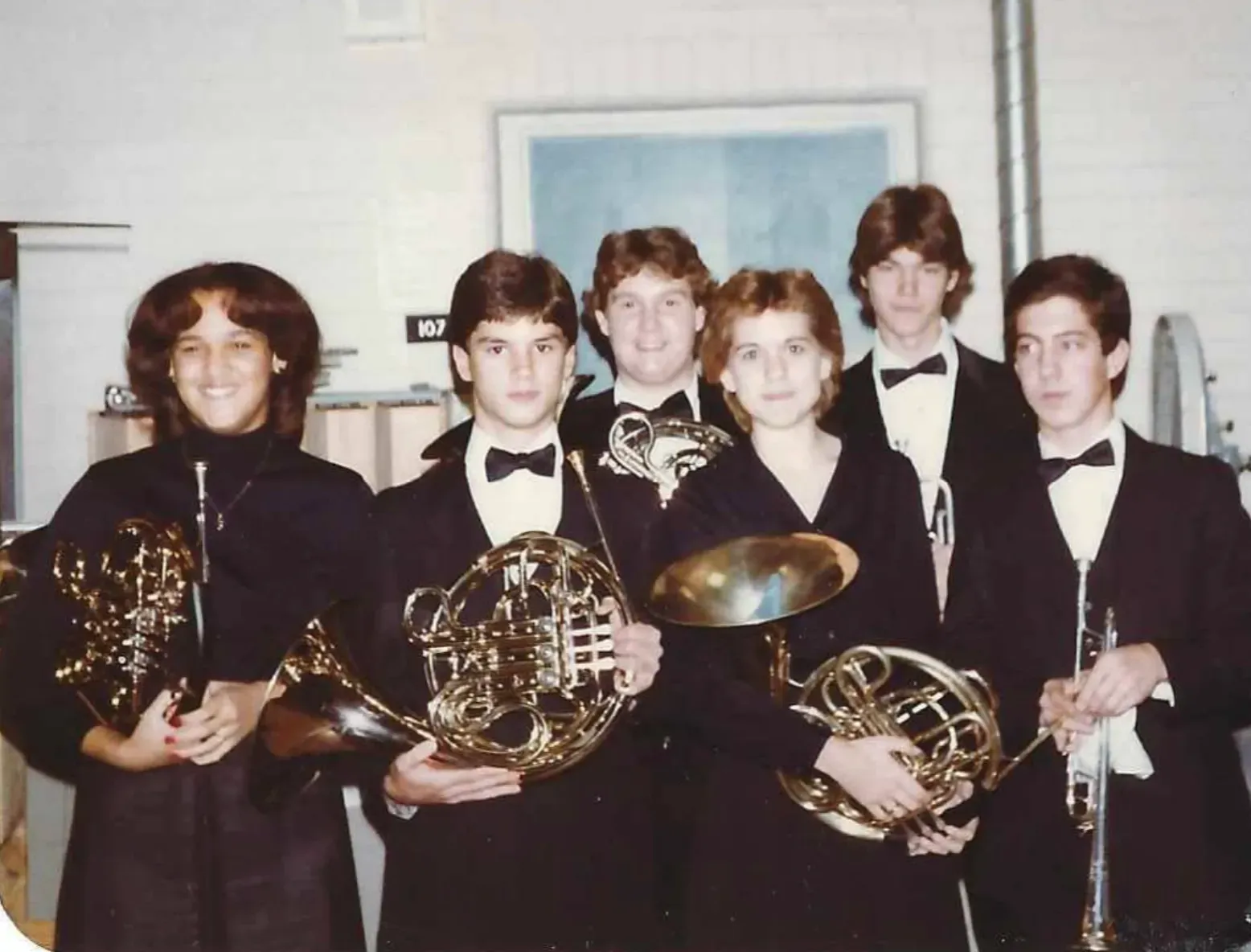
In almost every community I’ve been part of, I’ve gotten close enough to love it and stayed far enough out that I could leave without much trouble: my bandmates in high school; the musicians at the Eastman School of Music; the Marines I served with; the sales team at my first job; the sangha (the community of practitioners) at the Santa Monica Zen Center, where I practiced for seven years; and the adventure racers I raced side by side with.
I even did it in the communities I built myself. I opened CrossFit LA in 2004, as the ninth CrossFit affiliate in the world, back when almost nobody had heard of it, and built it by hand, one person at a time. It’s still going today. Later, I co-founded the Whole Life Challenge, an online health program that grew to more than 200,000 people. And even in those, I kept one foot out the door.
It always worked the same way. Each group turned out to be a little too much of something, usually the very thing that drew me to it. The musicians were a little too into classical music and practicing their instruments. The Marines were a little too Marine-y. The CrossFitters were a little too CrossFitter-y. And the Zen Center was a little too bow-y and chant-y for me to ever fully call it mine.
I think each of those groups was a part of me, turned all the way up: the musician, the Marine, the athlete, the guy who wanted to love and be loved out loud. Going all the way in would have meant becoming more of that than I was ready to be. So I’d find some small reason to hold back. It’s probably why the most loving room I’ve ever been in felt a little too loving.
What still gets me is that those small reasons were never really about the people in those groups. The Marines I served with, my gym family at CrossFit LA and my friends from college were some of the best friends I’ve ever had. I’d invite every one of them into my living room tomorrow and love them without conditions. And still, part of me held back, even from them.
And it went deeper than friendship. I did it with my own family. I loved them, and without ever realizing it, I kept them at arm’s length, as if staying close would somehow hold me back.
There’s one moment from Operation Desert Storm that has stuck with me to this day. I spent nine months in the Persian Gulf, and my mom and my family supported me through every bit of it, worried sick about whether I’d make it home alive. When I finally came back, I didn’t go home. I took a road trip with a buddy from college instead.
So what were those small reasons really about? Keeping me safe. Somewhere deep down, without ever putting it into words, I’d worked it out like this… if you’re never all the way in, nobody can ever push you out. And you’re never in so deep that you can’t slip out and go find the next place to belong.
The distance did something else, too. It kept proving the story I’d carried since I was a kid, that I didn’t really belong anywhere. No wonder I always felt like an outsider. I was the one keeping myself just outside. And I couldn’t see any of it, because you can’t read the label of the jar you’re inside of.
What did it cost me? The depth of my relationships. I have friendships from every one of those groups, and I treasure them. But most of them only went so far, because I only let them go so far. I’ll never know how close some of those people and I could have been.
It also cost me the chance to ever be all the way in. I know how strange that sounds. I studied trumpet at the Eastman School of Music and served as a Marine officer. I competed in the CrossFit Games, and I built two communities from scratch. How could anyone do all that and not be all the way in?
It barely makes sense to me, either. But it’s absolutely true. On the inside, I never got there. I don’t even know what that feels like. I’m only now starting to find out.
I probably would have kept living that way for the rest of my life if something hadn’t knocked me flat. In 2019, the business I’d spent a decade building stopped growing, the future I’d pictured for it disappeared, and I fell apart. But falling apart gave me something I needed, a huge dose of humility.
And humility did something I didn’t expect. It took away my reasons. When you’ve been knocked down that far, it gets very hard to look at anyone and think you’re different from them. I started to see how much I had in common with all the people I’d been so sure I wasn’t like. And the more I saw myself in them, the harder it got to find that small reason to hold back.
The first person I saw differently was my mom. Up until then, I’d only ever seen my life through my own eyes. I’d never really stopped to consider what any of it might have looked and felt like through hers. And when I did, I really saw her, and the struggle she’d endured to keep her life together during my teenage years.
When I was fourteen, her whole world was falling apart. Her marriage was ending. My dad had always refused to leave the house they’d built together. He’d been away getting sober, and on the very day he came home, we moved out. We spent that summer in a borrowed house and the fall in a friend’s basement while she looked for a place of our own, working full-time and raising two kids the whole way through. Leaving the house was traumatic for all of us. But after that, she held everything together so well that my sister and I never felt how hard it was for her. I never noticed even a hiccup.
When all of that landed, something changed inside of me. My heart just opened, like the Grinch’s when it grew three sizes. I cried for hours. I could finally feel the sacrifices she’d made, and the courage and determination it took, again and again, to give me the life I have.
Over time, I was able to share it with her. Some of that was acknowledgment, finally telling her what I saw. Even more of it was presence. I started showing up with her in a way I never had before.
And it didn’t stop with her. Little by little, it spread to everyone and everything, like light coming through a crack.
That light has kept growing ever since. Much of what I do today in my coaching practice comes from it. When I sit with someone, I see so much of myself in them that it’s almost like I’m talking to myself. And the most helpful thing I can do for them is what I finally did with my mom: really see them and love them exactly as they are, and over time, they start to do the same for themselves. I bring that same thing home to my family and my friends. And every time I see someone that way, I get a little better at seeing myself that way, too.
For the first time in my life, I want both feet in. I want the people I love close.
If any of this sounds familiar, you might be someone who looks all the way in from the outside, warm and easy to be around, and still feels like you’re watching your own life from just outside the room.
Here’s a practice for you. Think of someone you love but have kept at a little distance, maybe a parent or an old friend. Then take a few minutes to look at their life through their eyes instead of your own. What has it looked and felt like for them? What have they been carrying all this time?
This can be harder than it sounds. You might feel something inside you pull back, or find your mind wandering off. That pull is worth noticing. It’s probably the same small reason you’ve been holding back from them all along. You don’t have to argue with it. Just see it.
There’s nothing you need to do with what you see yet. Keep practicing, with this person and with others. It’s like a muscle that gets stronger every time you use it. And when you’re ready, the closeness tends to follow.
Here’s what I’ve learned. Every one of those groups was offering me the thing I wanted most, a place to belong, and the only one keeping me at the edge was me. When I finally let myself see the people in front of me, really see them, the way I finally saw my mom, I found out something I’d missed my whole life. I’d belonged all along.
With love, Andy
P.S. This essay is one of five about the different ways we try to earn a place we already have. If you’re curious which one runs your life, I built a short quiz that’ll show you. It just takes a few minutes. Take the quiz
The Series:
- Why You Keep Trying to Prove You Belong: doing whatever it takes to fit in
- Why You Keep the People You Love at Arm’s Length: keeping one foot out the door of every group I’ve loved being part of (this one)
- Why Being the Strong One Keeps Love Out: the soft side of me I kept hidden for forty years
- Why Success Never Feels Like Enough: never being able to stop long enough to feel like you’ve made it
- Why You Keep Trying to Earn a Place You Already Have: what all four have in common
Ready to talk about where you actually are today?
Curious which pattern is running yours? Find your pattern →